





Blog

How To Know If You Need Chevy Radiator Repair

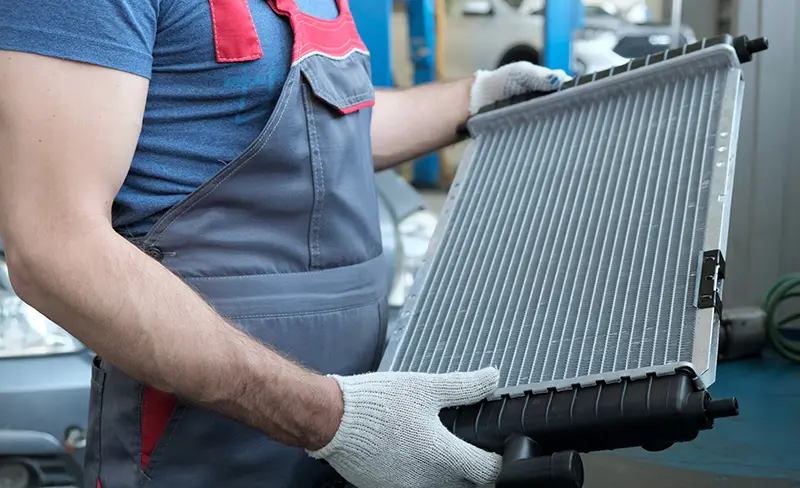
Mechanic in overalls and gloves holding up a new, silver car radiator in an auto repair shop.

Your vehicle's cooling system keeps the engine at a safe temperature, and Chevy radiator repair addresses problems that can affect performance and reliability. A radiator that is leaking, clogged, or damaged can cause the engine to overheat, which may lead to costly issues. Recognizing the warning signs allows you to act before a small problem turns into a bigger one.

You use your Chevrolet vehicle every day for commuting, errands, or long trips, and even minor cooling system problems can affect how smoothly it runs. Being aware of what to watch for helps you keep your vehicle operating efficiently and reduces the risk of unexpected breakdowns.

Overheating and Temperature Changes

One of the first signs that your radiator may need attention is an increase in engine temperature. If the temperature gauge rises higher than normal or moves up and down while driving, it could indicate that coolant is not circulating properly. Overheating can happen slowly or suddenly depending on the condition of the radiator.

Steam coming from under the hood or a noticeable heat smell while driving can also point to radiator issues. Acting on these warning signs quickly can prevent more serious engine problems. Watching how your engine behaves helps you identify when service is needed.

Coolant Leaks and Low Levels

Leaks or low coolant levels often indicate that the radiator needs service. You might see puddles under your vehicle with fluid that is green, orange, or pink. Even a small leak can reduce cooling efficiency and allow the engine to run hotter than it should.

Coolant levels that drop without visible leaks may also point to an internal issue in the radiator or connected components. When coolant does not circulate correctly, the engine may lose performance. Regularly checking fluid levels helps you spot potential problems early.

Visible Damage and Unusual Noises

Physical damage can also signal the need for repair. Rust, bent fins, or debris buildup can reduce the radiator's ability to manage heat effectively. Over time, corrosion or sediment may block coolant passages and make the system less efficient.

You might also hear hissing or gurgling sounds from the radiator or hoses. These noises can indicate trapped air or small leaks. Paying attention to both visual and audible signs allows you to notice problems that could otherwise go unnoticed.

Effects on Engine Performance

A failing radiator can affect overall engine performance. You may experience reduced power, lower fuel efficiency, or difficulty maintaining consistent operation. These effects occur because the engine is not running at the correct temperature, which can impact combustion and component function.

Addressing radiator problems early allows your cooling system to function properly and reduces the chance of damage to other engine parts. Taking action promptly helps your vehicle remain reliable and efficient over time.

At Sarchione Chevy of Randolph, our vehicles and genuine parts are designed to deliver dependable performance and long lasting reliability. We provide service and repair options that help you maintain your vehicle, improve efficiency, and drive with confidence every day. With our team of trained technicians, you can get the right care for your cooling system without unnecessary delays. Visiting us regularly helps you keep your Chevy running smoothly and avoid costly repairs down the road.

Recommended Posts

2026 Chevy Equinox showcasing size, tech, or budget.

Chevy Equinox vs Traverse: Which SUV Fits Randolph, OH Families Best?

If you're shopping for a family SUV and trying to decide between the Chevy Equinox vs Traverse, you're in good company. Both are strong options, but they serve different needs. Whether you're prioritizing size, tech, or budget, understanding the differences can make your decision a whole lot easier. more read the rest of this entry Size and Seating The Chevy Equinox vs Traverse comparison starts with what matters most for families: space. The Equinox is a two-row, five-passenger SUV that fits everyday errands, school runs, and weekend trips comfortably. It measures just over 15 feet in length, making it easy to park and maneuver in tighter spaces. The Traverse steps things up with available seating for up to eight passengers across three rows. If you have a larger family or regularly carpool, that third row makes a meaningful difference. The Traverse also stretches to over 204 inches in length, giving everyone more room to spread out. Cargo Space Cargo is another area where the chevy equinox vs traverse decision becomes clear. The Equinox offers up to 63.5 cubic feet of maximum cargo volume with the rear seats folded flat. That's a solid amount for a mid-size SUV and works well for grocery runs, luggage, and sports gear. The Traverse takes a significant lead here, delivering a best-in-class maximum cargo volume of 98 cubic feet with the second- and third-row seats folded. If you're regularly hauling strollers, camping equipment, or athletic gear for multiple kids, the Traverse's extra room is hard to overlook. Performance and Powertrain Both SUVs offer capable, everyday-friendly powertrains. The Equinox runs on a 1.5-liter turbocharged engine producing 175 horsepower and 203 pound-feet of torque. Available all-wheel drive adds traction when roads get slippery, and it can tow up to 1,500 pounds when properly equipped. The Traverse is powered by a turbocharged 2.5-liter engine rated at 328 horsepower and 326 pound-feet of torque, paired with an eight-speed automatic transmission. It handles up to 5,000 pounds of towing capacity, making it a better fit if you pull a small boat or trailer on occasion. Technology and Infotainment Inside the Equinox, you'll find an 11.3-inch diagonal touchscreen with Google built-in, Apple CarPlay, and Android Auto compatibility. Available wireless phone charging and OnStar connectivity round out the tech package nicely. The Traverse offers a larger 17.7-inch diagonal touchscreen display, plus an 11-inch diagonal Driver Information Center. Higher trims add available Super Cruise hands-free driver assistance technology, which is a standout feature for long highway drives. Both SUVs keep you well connected, but the Traverse edges ahead in screen size and available driver assistance technology. Safety Features Families in Randolph, Ohio can feel good about either choice when it comes to safety. The Equinox comes standard with over 15 safety and driver assistance features, including Automatic Emergency Braking, Front Pedestrian Braking, Lane Keep Assist with Lane Departure Warning, and IntelliBeam headlights - all part of the Chevy Safety Assist package. The Traverse includes over 20 standard safety and driver assistance features, with options like Rear Cross Traffic Braking, Blind Zone Steering Assist, and Intersection Automatic Emergency Braking available. If safety technology is a top priority, the Traverse's broader list of available features gives it a slight edge. Frequently Asked Questions Is the Equinox or Traverse better for a small family? For families of four or five, the Equinox is a practical, affordable choice. Larger families will benefit from the Traverse's third row. Which SUV has more cargo room? The Traverse offers up to 98 cubic feet of maximum cargo volume, compared to 63.5 cubic feet in the Equinox. Does the Equinox have all-wheel drive? Yes, available all-wheel drive is offered on the Equinox. Can the Traverse tow more than the Equinox? Yes. The Traverse tows up to 5,000 pounds, while the Equinox handles up to 1,500 pounds when properly equipped. Does the Traverse have Super Cruise? Available Super Cruise hands-free driver assistance technology is offered on select Traverse trims. Find Your Perfect Chevy SUV Near Randolph, OH Whether the Chevy Equinox vs Traverse decision comes down to space, towing, or technology, both vehicles are built to handle family life with confidence. Stop by to explore your options and find the SUV that fits your daily routine. Our team is ready to help drivers throughout Randolph, Ohio get behind the wheel of the right Chevrolet.

2026 Chevrolet Silverado 1500 standing on top of the mountain, surrounded by mountains.

Chevy Silverado vs Colorado: Which Truck Fits Randolph, OH Drivers Best?

If you're shopping for a new truck and weighing the Chevy Silverado vs Colorado, you're in good company. Both the 2026 Chevrolet Silverado 1500 and the 2026 Chevy Colorado are capable, well-built trucks - but they're designed with different drivers in mind. Whether you're hauling equipment across Portage County, commuting to Akron, or heading out on a weekend adventure, knowing the key differences can help you make the right call. more read the rest of this entry How the Chevy Silverado vs Colorado Stack Up on Power When it comes to engine output, the 2026 Chevrolet Silverado 1500 offers more variety. You can choose from four powertrains, including the TurboMax engine with 310 horsepower and 430 pound-feet of torque, the 5.3-liter EcoTec3 V8 with 355 horsepower, the 6.2-liter EcoTec3 V8 producing 420 horsepower, and the Duramax 3.0-liter Turbo-Diesel rated at 305 horsepower with an impressive 495 pound-feet of torque. The 2026 Chevy Colorado keeps things simpler with a single 2.7-liter TurboMax I-4 engine that delivers 310 horsepower and 430 pound-feet of torque. It's a strong engine for a midsize truck and handles most everyday tasks with ease. Towing and Payload - A Key Difference in the Chevy Silverado vs Colorado Comparison If heavy towing is a priority - say, pulling a boat to one of the nearby lakes or hauling a loaded trailer across rural Northeast Ohio roads - the Silverado 1500 has a clear advantage. It can tow up to 13,300 pounds and carry a maximum payload of 2,260 pounds, depending on configuration. The Colorado is no slouch, offering a towing capacity of up to 7,700 pounds. That's plenty for a camper, utility trailer, or recreational equipment. For drivers in Randolph, OH, who have lighter hauling needs or prefer a truck that's easier to park and maneuver on tighter roads, the Colorado is a genuinely practical choice. Off-Road Capability and Trim Options Both trucks offer strong off-road packages for tackling unpaved roads and winter weather. The Silverado 1500's ZR2 trim includes a 2-inch factory suspension lift, Multimatic DSSV dampers, and front and rear electronic lockers. The ZR2 Bison Edition adds even more heavy-duty protection with AEV skid plates, bumpers, and all-terrain upgrades. The Colorado ZR2 comes with a 3-inch factory-installed lift, Multimatic DSSV dampers, and 33-inch mud-terrain tires. The Trail Boss trim on both trucks provides a 2-inch lift with an off-road-tuned suspension. Whether you're choosing the Silverado or the Colorado, either truck can handle what Northeast Ohio's back roads and winter conditions throw at it. Technology and Interior Comfort The Silverado 1500 steps up the tech with a 13.4-inch diagonal touchscreen, a 12.3-inch diagonal Driver Information Center, and a 15-inch Head-Up Display. It also offers available Super Cruise hands-free driving and a standard Wi-Fi hotspot. Chevy Safety Assist comes standard on both trucks and includes features like Automatic Emergency Braking and Lane Keep Assist. The Colorado includes an 11.3-inch diagonal touchscreen with Google built-in, wireless Apple CarPlay and Android Auto compatibility, and available wireless phone charging. Both are well-equipped for daily driving and longer hauls alike. Frequently Asked Questions Which truck gets better fuel economy? The Silverado 1500 equipped with the Duramax Turbo-Diesel engine achieves 28 miles per gallon on the highway, making it one of the most fuel-efficient options in its class. Is the Silverado too big for daily driving? Not at all. The Silverado's advanced driver assistance features and comfortable interior make it manageable for everyday use, including city driving and commuting. Is the Colorado a better fit if I don't need maximum towing? Yes. For drivers who need a capable truck without the footprint of a full-size, the Chevy Silverado vs Colorado decision often comes down to this. The Colorado is lighter, easier to maneuver, and still very capable. Which Truck Is Right for You? Choosing between the Chevy Silverado vs Colorado ultimately depends on your specific needs. If you need maximum towing capacity, a wider range of powertrain options, and a more tech-forward cabin, the 2026 Silverado 1500 is the stronger fit. If you want a nimble, capable midsize truck that handles daily errands and weekend adventures in Randolph, OH, the 2026 Colorado delivers excellent value. Stop by to explore both models, view current inventory, and schedule a test drive to find the one that fits your life.

Chevrolet Service in Randolph, OH

How to Keep Your Chevrolet Running Like New

Your Chevrolet is built to last — but like any well-engineered machine, it performs best when it's properly cared for. Whether you're driving a rugged Silverado, a family-friendly Traverse, or a nimble Trax through the roads of Randolph, Ohio, a consistent maintenance routine makes all the difference between a truck or SUV that holds up for years and one that starts showing its age too soon. The good news? Keeping your Chevrolet running like new doesn't require a mechanical degree. It just takes a little attention, some basic knowledge, and the right team in your corner. Stay on Top of Oil Changes One of the most important things you can do to keep your Chevrolet running like new is to stay current on oil changes. Fresh oil lubricates your engine's moving parts, reduces friction, and helps regulate temperature. When oil gets old and breaks down, it loses its ability to do that job effectively. Chevrolet vehicles come equipped with an Oil Life Monitoring System that takes the guesswork out of scheduling. Rather than relying on a generic mileage interval, the system monitors driving conditions and alerts you when it's actually time to change the oil. That said, a good rule of thumb is to have your oil checked regularly — especially if you do a lot of short trips or towing. more Rotate Your Tires and Check Tire Pressure Tires wear unevenly depending on their position on the vehicle, so regular rotation helps extend their lifespan and keeps your ride balanced. Most technicians recommend rotating tires every 5,000 to 7,500 miles, though your owner's manual will have the specific recommendation for your model. Equally important is maintaining proper tire pressure. Underinflated tires can reduce fuel efficiency, cause uneven wear, and compromise handling — none of which you want, especially on Ohio's varied road conditions. Checking pressure once a month takes just a few minutes and can save you money in the long run. Keeping your Chevrolet running like new starts from the ground up. Keep Up With Fluid Checks Engine oil gets the most attention, but your Chevrolet relies on several other fluids to operate safely and efficiently. These include coolant, brake fluid, transmission fluid, power steering fluid, and windshield washer fluid. Each plays a specific role in your vehicle's performance and safety. Low or degraded coolant, for example, can lead to overheating — a serious and expensive problem. Brake fluid that's absorbed too much moisture can reduce braking performance. Checking these fluids periodically and replacing them as recommended in your owner's manual is a simple way to prevent larger issues down the road. Don't Ignore Warning Lights Modern Chevrolet vehicles are designed with sophisticated onboard systems that monitor everything from engine performance to tire pressure to brake wear. When a warning light appears on your dashboard, it's the vehicle's way of telling you something needs attention. Ignoring a check engine light or low coolant warning might not seem like a big deal in the short term, but small problems have a way of becoming bigger ones when left unaddressed. If a light comes on and you're not sure what it means, it's always worth having a technician take a look. Keeping your Chevrolet running like new means responding to those signals promptly. Schedule Regular Inspections Even if your Chevrolet seems to be running perfectly, routine inspections are a smart investment. A trained technician can spot wear on brake pads, identify minor leaks, check belts and hoses, and ensure everything is working as it should — often before you'd notice anything wrong from the driver's seat. Chevy service in Randolph, OH is available to help you stay ahead of potential issues with professional, OEM-approved care for your vehicle. Certified technicians who know Chevrolet vehicles inside and out can help you build a maintenance schedule that fits your driving habits and keeps your investment protected. Use Genuine Chevrolet Parts and Accessories When repairs or replacements are needed, the quality of the parts used matters. Genuine Chevrolet parts are engineered specifically for your vehicle and meet the same standards as the components installed at the factory. Using the right parts helps preserve performance, reliability, and in some cases, your warranty coverage. Whether you need new brake pads, filters, or wiper blades, opting for OEM-quality components is one of the smarter decisions you can make as a vehicle owner. Chevy service in Randolph, OH can help ensure the right parts go into your vehicle every time. Visit chevydrivesohio.com to Schedule Your Next Service Taking care of your Chevrolet doesn't have to be complicated. With the right maintenance habits and a trusted service team, you can keep your vehicle performing at its best for years to come. Drivers throughout Randolph, Ohio, can count on experienced professionals who are dedicated to helping you get the most out of your Chevrolet. Ready to keep your Chevrolet running like new? Visit chevydrivesohio.com to explore service options, schedule an appointment, and discover everything available to help you drive with confidence. Your Chevrolet Deserves the Best Care Proper maintenance is less about following a rigid checklist and more about building good habits. Regular oil changes, tire care, fluid checks, and timely repairs all work together to protect your vehicle's long-term health and performance. Staying proactive is always easier — and less expensive — than addressing major repairs after the fact. Whether you've had your Chevy for one year or ten, the path to keeping your Chevrolet running like new is the same: stay consistent, pay attention to what your vehicle tells you, and lean on certified professionals when you need support. Your Chevrolet was built to go the distance, and with the right care, it will.